
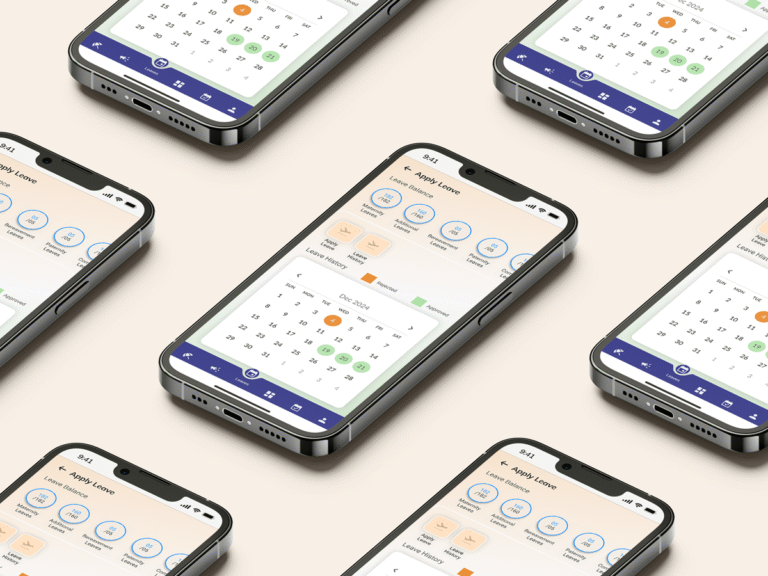
Bharatpayroll HRMS Mobile Application
As the lead product designer and UX strategist on this project, I led the end-to-end mobile app design — from field research across five Indian cities to a Figma-built, developer-ready design system with 120+ components.
Client
Role
Duration
Year
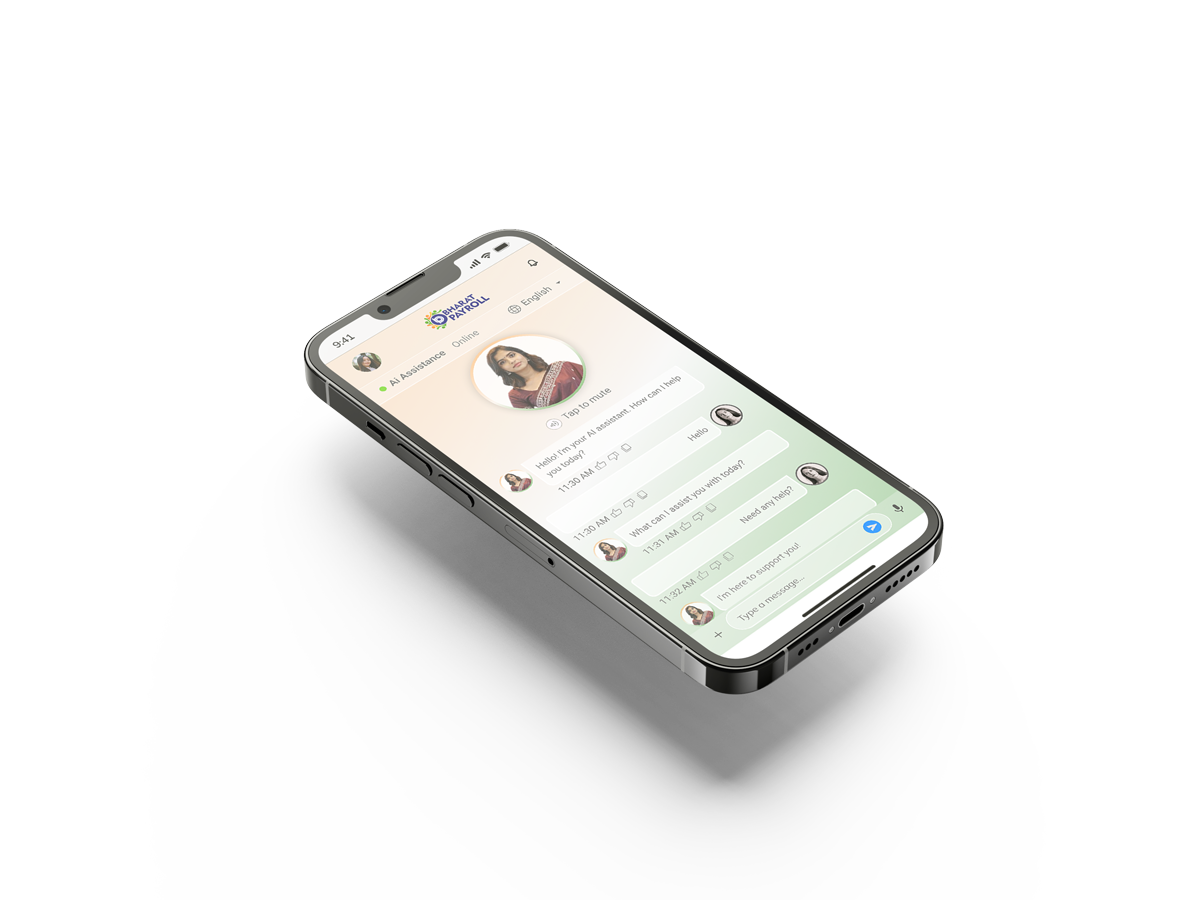
Ideation & Wireframing
Mapped all 34 feature areas to a mobile-first navigation model. Rapid lo-fi wireframes tested three IA structures with HR managers and employees across role types.
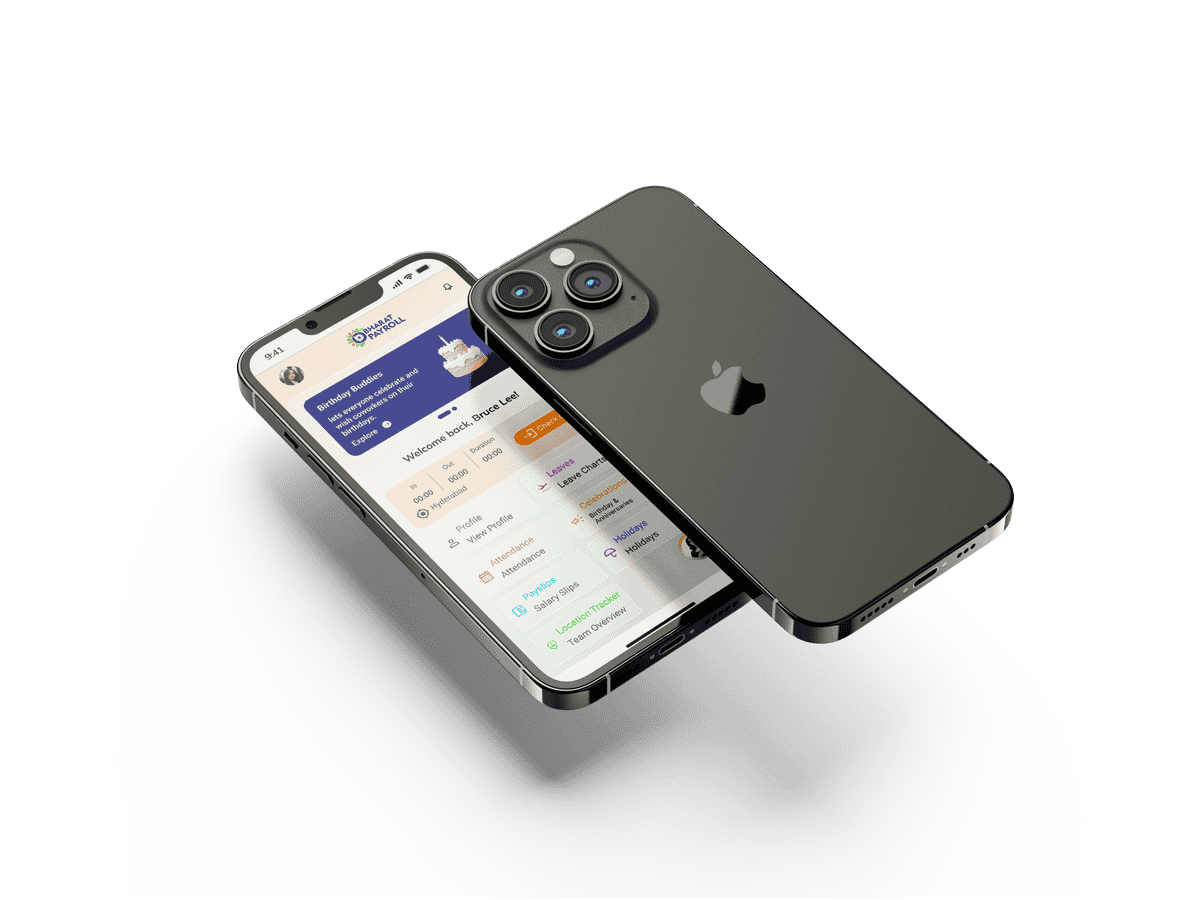
High-Fidelity Design
Built a component system with 120+ dark-mode components. Designed three role variants (Employee, Manager, HR Admin) with contextual dashboards and progressive disclosure.
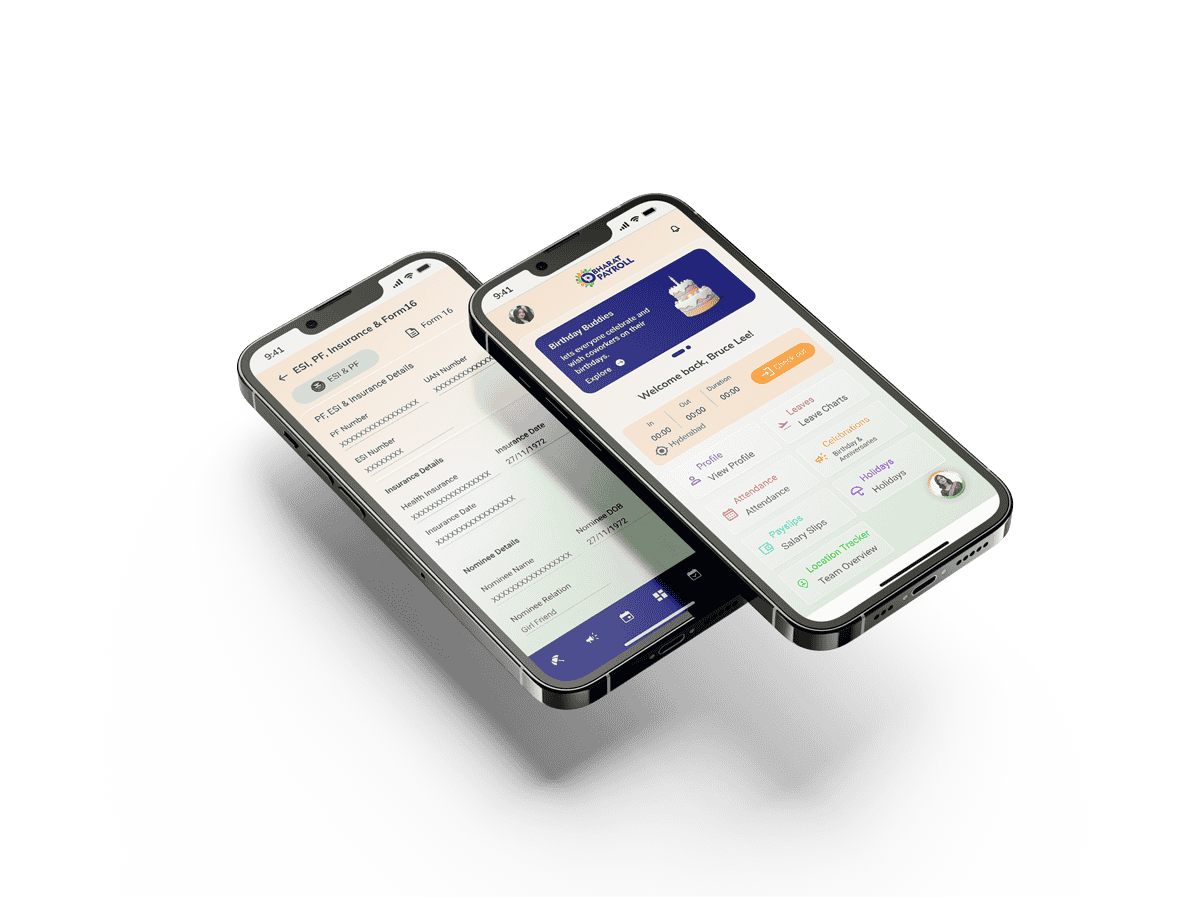
Testing & Iteration
Conducted 3 rounds of usability testing with 31 participants. Iterated on payslip readability, leave request flow, and the offline attendance sync mechanism before final handoff.
The Challenge
A Desktop Product Stuck in the Field
Field-level employees — factory workers, delivery staff, and contract labour — made up 68% of Bharatpayroll’s user base but had near-zero engagement with the platform. With no mobile app, workers depended entirely on HR desks for payslip access, leave tracking, and grievance filing. The platform suffered from a 71% drop-off rate on mobile browsers and a 3.1/5 employee satisfaction score. The company needed a mobile-native redesign that balanced payroll complexity with everyday simplicity.
Project Goals
- Reduce HR desk queries by 40% via self-service
- Achieve sub-3 second load on 4G networks
- Launch in 11 regional Indian languages
- Enable biometric attendance check-in
- Simplify payslip comprehension for low-literacy users
Key Challenges
- Feature parity with a complex desktop HRMS
- Balancing regulatory compliance with usability
- Supporting 2G/3G rural network conditions
- Designing for diverse literacy and tech literacy levels
- Navigating multi-role access (Employee, Manager, HR Admin)
Research & Discovery
I led an extensive field research programme across five Indian cities — visiting factories, warehouses, and BPO offices to understand employees’ actual relationship with payroll and HR systems. Alongside interviews, I ran contextual inquiry sessions where workers attempted to use the existing mobile web experience in real conditions.
8mo
Analytics Data
5
Cities Visited
31
Usability Sessions
48
User Interviews
The Solution
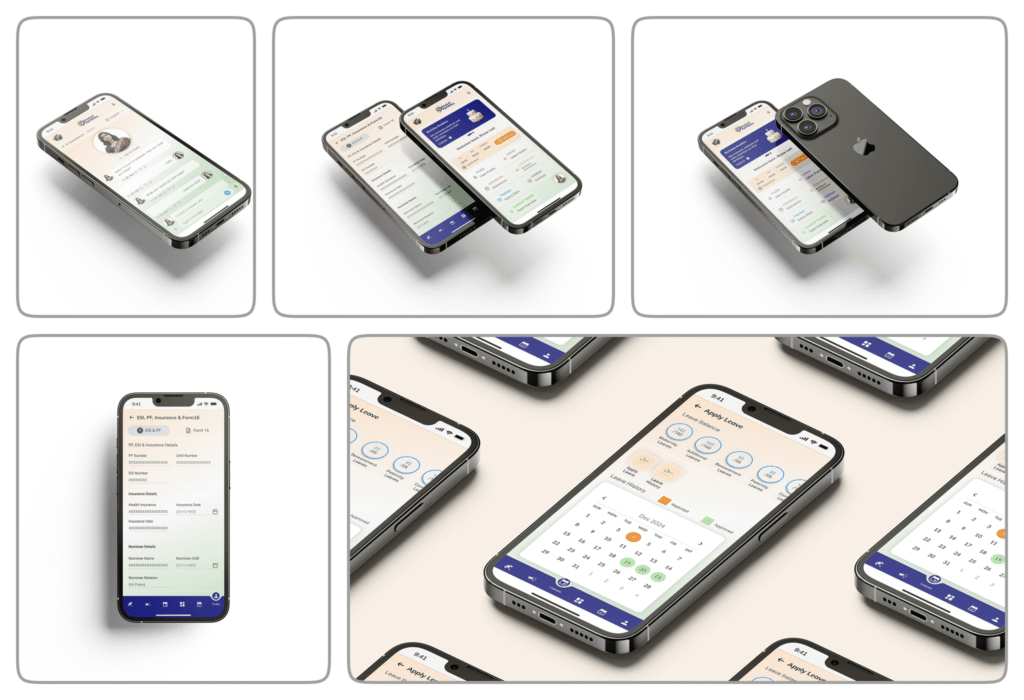
The redesigned Bharatpayroll HRMS app delivers a role-intelligent experience that adapts its interface based on whether you’re a floor employee, team manager, or HR administrator. A persistent bottom navigation anchors five core modules — Payroll, Attendance, Leaves, Team, and Profile — each designed with the lowest-common-denominator device and network in mind. The app supports offline check-in, intelligent payslip summaries in plain Hindi and English, and a push notification engine that prompts action at exactly the right moment.
- Visual payslip with plain-language deduction breakdown
- Biometric + GPS-based attendance with offline sync
- 1-tap leave application with real-time approval status
- Manager dashboard with team attendance heatmap
- PF, ESI, TDS compliance calculator built in-app
- 11 regional language support with auto-detection
- Dark-mode-first UI optimised for AMOLED displays
- Smart notifications for payslip release and leave reminders
Key Insights
- Workers primarily check payslips on payday — a single, high-stakes touchpoint that must be flawless
- Leave application and approval is the #1 most-used HR feature but requires 8+ taps in the legacy web flow
- Visual salary breakdowns (PF, TDS, deductions) were consistently misunderstood — users needed plain-language labels
- Manager personas required a parallel dashboard experience — not a scaled-down employee view
- Offline mode for attendance was a hard requirement in low-connectivity manufacturing zones
2.1s
94%
68%
4.7/5
- Compliance and clarity are not opposites. The biggest design win was making complex statutory deductions (PF, ESI, TDS) understandable through visual hierarchy and plain language — not by hiding them.
- Field research is non-negotiable for enterprise mobile. Office-based testing would have missed the offline requirement entirely — a feature that became one of the app’s highest-rated capabilities.
- Role-intelligence reduces cognitive load at scale. Building three distinct role experiences into one app — rather than one universal UI — was the single most impactful architectural decision.
- Dark-mode-first is a real user need on AMOLED devices. A majority of field workers use budget Android handsets; dark mode wasn’t aesthetic — it was a battery and visibility concern in outdoor environments.
- Small UX improvements cascade into significant business outcomes. Reducing leave application from 8 taps to 2 directly accounted for the 68% reduction in HR desk load within 90 days.